Main areas of research
Environmental economics: What measures can be taken to mitigate climate change and what are their economic repercussions? How can the negative economic effects of climate change be reduced? Why do international agreements (such as Kyoto or Paris) not work particularly well? What effects do current extreme weather events have on local economies?
International economics: What makes a region successful in international competition? What role do organizations such as companies and banks play and what role do markets play in the international division of labour? How do environmental regulations influence international trade?
Behavioral Economic Theory: How do social comparisons, envy, status concerns, and time-inconsistent preferences affect individual behavior, general equilibrium, wealth inequality, and economic growth? The following topics are central to this line of research: envy; present bias; wealth distribution; saving; economic growth.
Public Economic Theory: How should taxes and other public policy instruments be designed in economies in which heterogeneity, externalities, behavioral distortions, market power, and intergenerational distributional and fairness concerns play a central role? The following topics are central to this line of research: optimal taxation; externalities; intergenerational justice; heterogeneous agents; dynamic public economics.

Price indices and real estate markets: How should housing affordability be measured and how does it differ across locations and time? To what extent are energy-efficiency improvements capitalized in house prices? How should the housing market be included in measures of inflation? How can comparisons of real income across countries be improved?
Econometrics and empirical economic research: How can economic theories be tested empirically? What data and methods are necessary for this? How can causal relationships be measured with non-experimental data? How can future economic development be predicted using statistical methods?
Decision theory and game theory: How can cooperation between people arise when cooperation goes against immediate self-interest? How should decisions be made under various forms of uncertainty? How do people really make these decisions? What influence does radical uncertainty have on stock prices and on the investment decisions of individuals?
Political Economy, Innovation and Growth: What impact does artificial intelligence have on the economy? What measures can ensure that as many people as possible benefit from artificial intelligence? How do inequality and political interests influence taxation, innovation and the distribution of wealth? How do political institutions influence the design of policy measures as well as social and political majorities? What influence do political institutions have on the incentives for social groups to become politically active, and what does this mean for the quality of policy measures?

Economic Policy examines the role of government intervention in the economy and analyzes the instruments through which institutions can promote economic growth, macroeconomic stability, employment, and social welfare. It focuses on the design, implementation, and evaluation of public policies, taking into account both their economic effects and their distributional implications. Research in Economic Policy addresses topics such as fiscal and monetary policy, market functioning, regulation, labour market policies, innovation, sustainability, competition, and inequality. A central objective is to provide evidence-based analyses to support effective economic policy decisions and the development of long-term strategies.
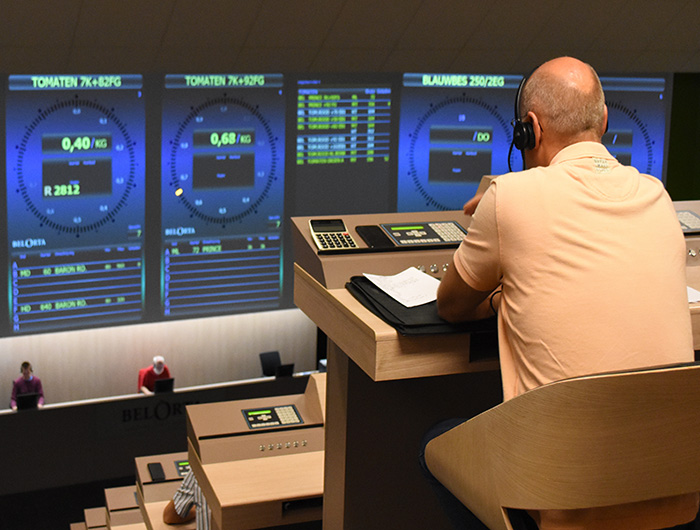
Mechanism design and market creation: Why does Google use auctions to sell search terms to advertisers? How can you create a functioning distribution outside of markets and prices? For example, how can you provide more patients with kidney failure with donor kidneys? How can reallocation decisions (e.g. from forest to building land) be made as efficiently as possible?